
Two more transactions, both signed by you. Nothing happens automatically.
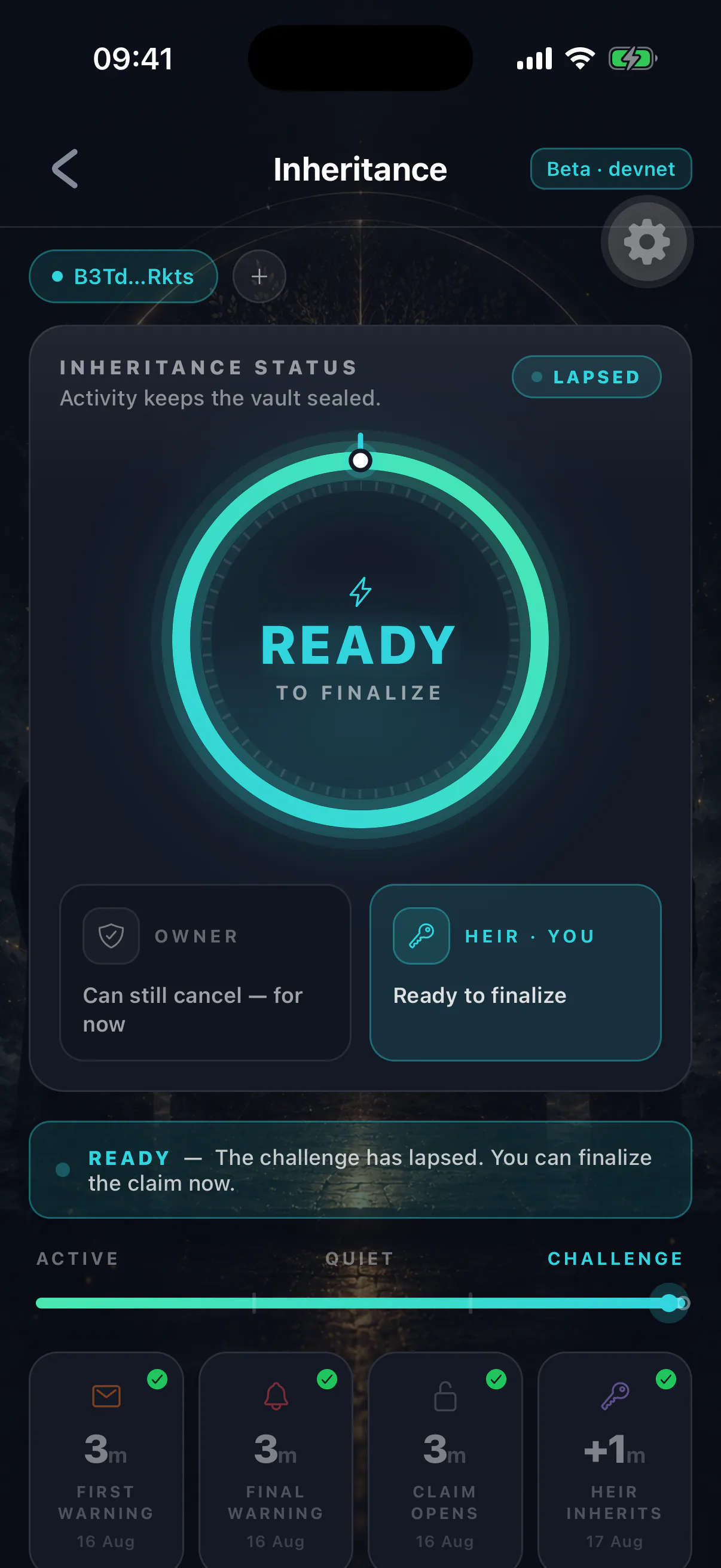
Finalizing
- 01
Confirm the window has closed
Your dashboard shows finalization as available. The program checks the timing itself and will reject an early attempt.
- 02
Sign the finalization
One transaction, one network fee. The claim status becomes finalized.
Finalization is the hinge. It is what makes the deposited assets withdrawable and what makes the vault readable to you.
Finalization is treated as terminal
Once an estate is finalized the owner cannot cancel it, change the heir, or add to it. This protects you: an owner who reappeared could not otherwise strip you of something already granted. It also means an owner who was genuinely alive has a slower, separate route back — see below.
Withdrawing
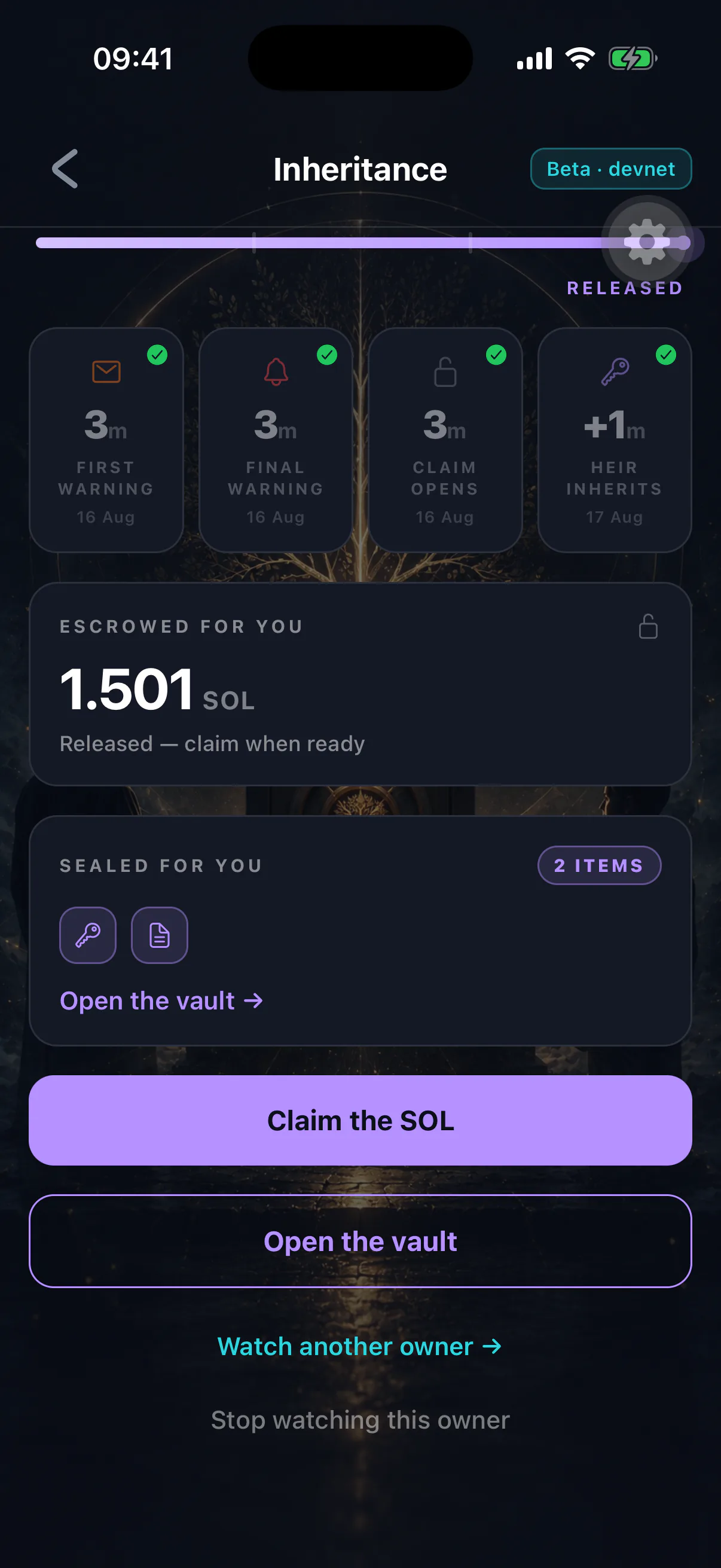
A further transaction moves the deposited assets to your wallet.
- SOL
Withdrawn to your address. A small rent amount stays behind to keep the on-chain account alive.
- SPL tokens and NFTs
Not applicable yet — the app cannot deposit them, so an estate never contains them today.
- What is not included
Anything the owner never deposited. Their ordinary wallet balance is not part of the estate and cannot be reached.
Once withdrawn, the assets are yours on-chain in the ordinary sense — under your key, in your wallet, subject to nothing.
Do not delay
There is a grace period after finalization during which the estate is unambiguously yours to take. Beyond it, an owner who is genuinely alive can reclaim what you have not withdrawn — a deliberate safety valve for a false trigger, not an attack on you.
Withdraw promptly, then open the vault.
Then the vault
Finalization has also unlocked the Legacy Vault items scoped to you. See unlocking the Legacy Vault.
Practical matters afterwards
Tax. Inheriting crypto has tax consequences in most jurisdictions, and receiving it on-chain does not exempt you from them. Get advice, keep the transaction signatures as records.
Probate. The chain does not know about probate and probate may not know about the chain. Tell whoever is administering the estate what you received.
Security. You now hold more than you did. Review your own backup, and read protecting yourself from scams — newly inherited wallets are targeted.
Your own arrangements. Consider naming an heir yourself. You have just seen, in detail, what its absence would have cost.