
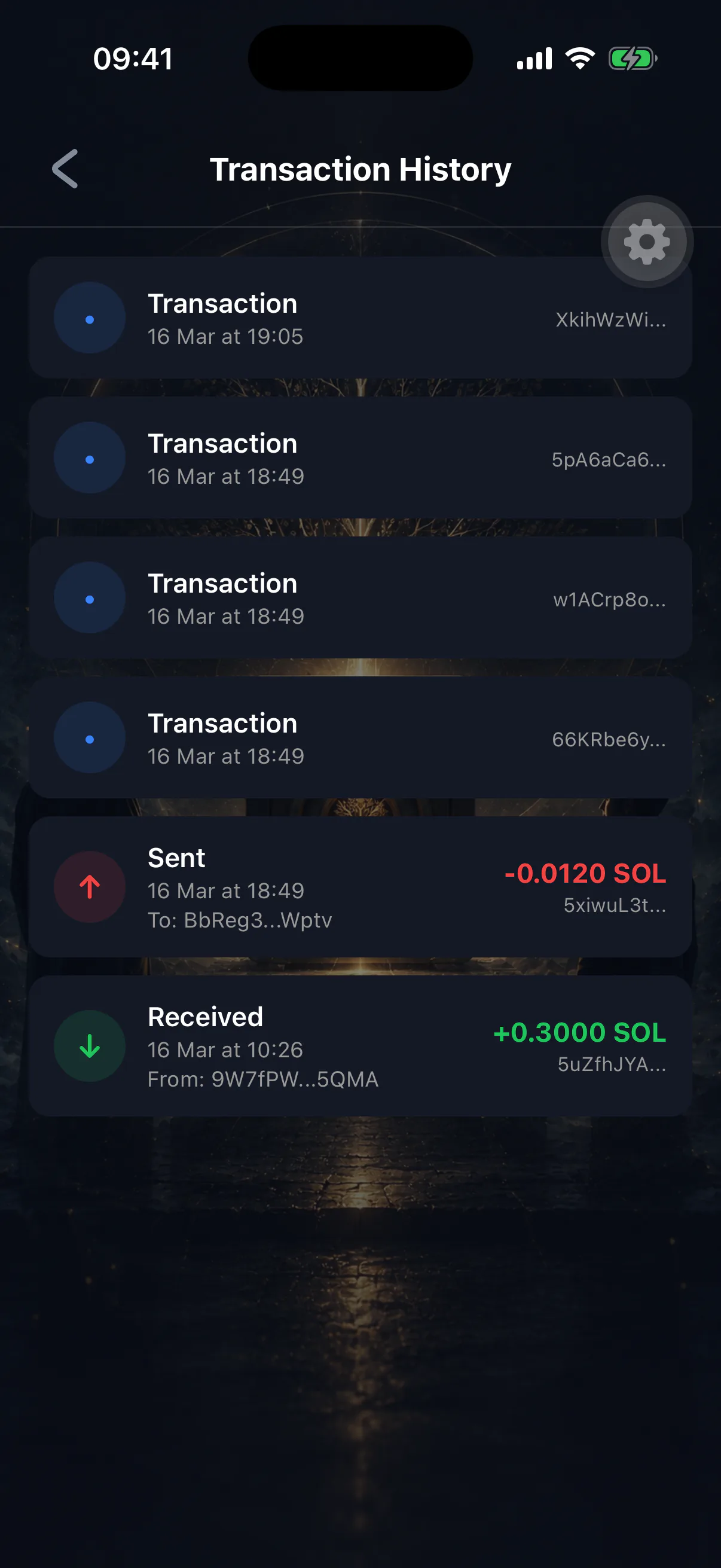
Every action your wallet has ever taken is on a public ledger. The history screen is a readable view of it.
What appears
- Transfers in and out, with counterparty and amount.
- Swaps, showing both sides of the trade.
- Inheritance actions — setting up the Switch, heartbeats, deposits, threshold changes.
- Interactions signed for connected apps.
- Failed transactions, marked as such. A failure that cost a fee still appears.
Verifying independently
Every entry carries a transaction signature: a long base58 string that uniquely identifies it on Solana. Paste it into any public block explorer and you get the authoritative record — accounts touched, instructions executed, confirmation status.
Verify the chain, not the app
If the app and an explorer ever disagree, the explorer is right — it is reading the chain directly. This matters most for inheritance: your heartbeat time and claim status live on-chain and can be checked by anyone, including a sceptical heir.
History and your inheritance timer
Your last heartbeat is stored in the on-chain inheritance account, not derived from your transaction history. The two normally agree, but they answer different questions:
- Transaction history
- Everything the address has ever signed
- Last heartbeat
The single timestamp the Switch measures your silence against
Actions in the app update the heartbeat. Funds arriving from someone else do not — an incoming transfer shows in history without moving the timer at all. See the heartbeat and checking in.
If something is missing
History is loaded from a Solana RPC endpoint and can be limited or slow to return under load. Pull to refresh, and if an entry is genuinely absent, look the address up on an explorer before concluding anything is wrong. See my balance looks wrong.