
The Switch supports a single primary heir today. One address, chosen by you, confirmed by them.
Getting the address safely
Verify the address out of band
Address substitution is a standard attack: malware or a compromised account swaps the string in a message. Confirm it a second way — read it aloud on a call, scan their QR in person, compare the first and last several characters.
The address you want is the receiving address of a Solana wallet they control, on a device they will still have in ten years' time. Not an exchange deposit address: those are assigned by the exchange, can be recycled, and cannot sign the acceptance the program requires.
They must accept
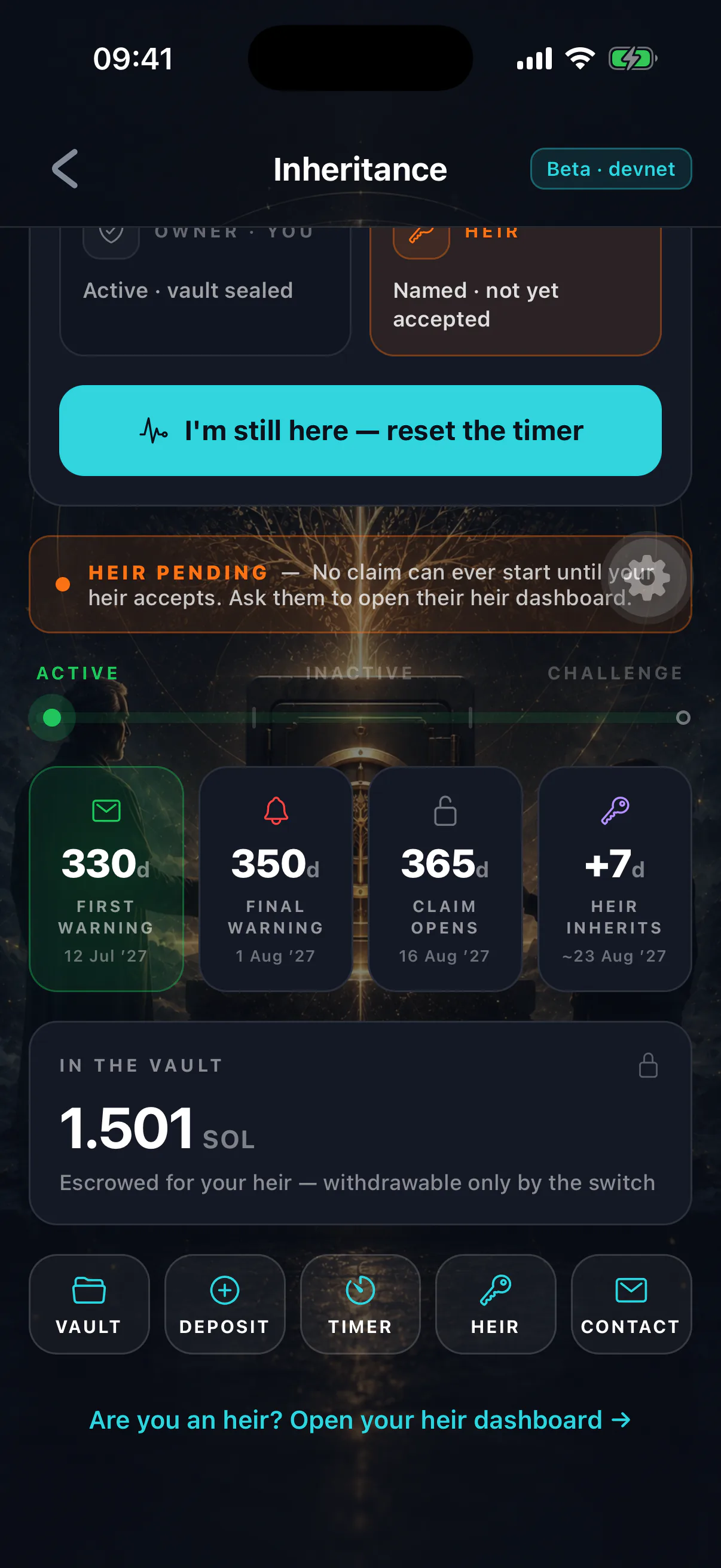
After you name them, your heir signs a one-off confirmation from the nominated wallet. Until that happens, the program refuses to let any claim start.
This is a deliberate safety property. It proves three things at once:
- The address exists and is well-formed.
- Somebody controls the private key behind it.
- That somebody knows they have been named.
An unconfirmed heir means no inheritance at all
If your heir never accepts, the estate locks when you die. Nothing transfers, nothing is recoverable. Getting the acceptance done is the single most important follow-up after setup.
Choosing the person
Some things worth weighing:
Can they use a wallet? Claiming means installing the app, signing several transactions, and doing so under emotional strain, possibly years from now. Technical comfort matters more than you might expect.
Will they still have that key? The address must be controllable when the time comes. Somebody who loses wallets is a poor choice — make sure they back up the wallet they nominate as carefully as you back up yours.
Do you trust them with the vault? Finalization releases both the assets and every vault item scoped to them. If some things should never be released, mark them owner-only. See release settings and scope.
Is there a conflict with your will? The Switch moves assets by code, not by probate. If your will says one thing and the Switch does another, you have created a problem for the people you left behind. Talk to a solicitor.
Telling them what to expect
Your heir should know, in advance:
- That they have been named, and by whom.
- That they must install the app and accept the role now.
- That they can watch your status any time, but cannot act until the timer lapses.
- That starting a claim is not a transfer — you can cancel it by simply opening your app.
- That there is a real waiting period after a claim before anything moves.
Point them at you have been named an heir.
Multiple heirs
Not supported yet. One primary heir, with the data model built to allow more later. If you need to split an estate today, the practical approach is to name one heir and leave clear written instructions in the Legacy Vault about how the proceeds should be divided — recognising that this depends on their good faith, which the program cannot enforce.